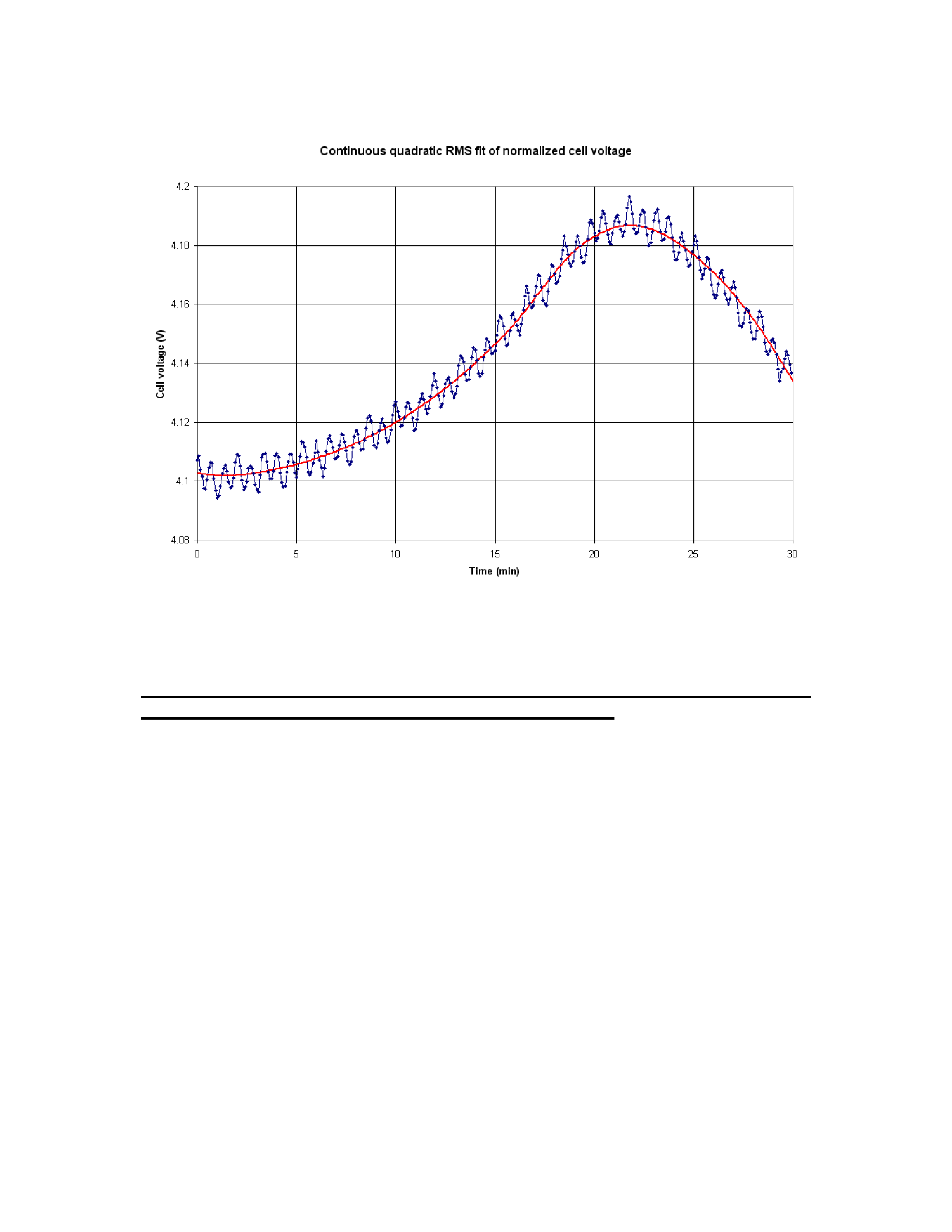
Figure 12: Resulting continuous quadratic RMS fit of normalized cell voltage
normalized cell voltage during a no feed observation period
cell voltage (labeled time slope of V
3).
Tests performed on Dyna/Marc cell simulator indicates that this correlation does
depends on a lot of factors influencing the cell resistance and the dynamics of the
alumina dissolution. For example, when the point fed alumina is dissolving rapidly,
there is not much dispersed alumina in the bath at the beginning of a no feed observation.
Under this condition, the rate of decrease of the dissolved alumina concentration in the
bath reaches the constant rate of the cell alumina electrolytic consumption. Otherwise
the rate of decrease of dissolved alumina is less than the maximal rate. Figure 13
presents the evolution of the dissolved alumina concentration during a 0% underfeeding
followed by a 140% overfeeding continuous tracking feeding regime for 5 cycles. Figure
14 presents the corresponding evolution of the noise free cell voltage while Figure 15