effectively controlled with an impressive accuracy employing only standard line
amperage and cell voltage signals as feedback control inputs.
Yet, a 12 hours simulation period without process events like metal taping or
with typical unavoidable process perturbations. For sure, the anode change event
affects the cell resistance and this effect must be accounted for in the In Situ logic.
Otherwise In Situ logic will assume the change is generated by a change of the
dissolved alumina concentration and it would very inappropriately change the feeding
regime accordingly.
It turns out that it is possible to account for the effect of the anode change on the
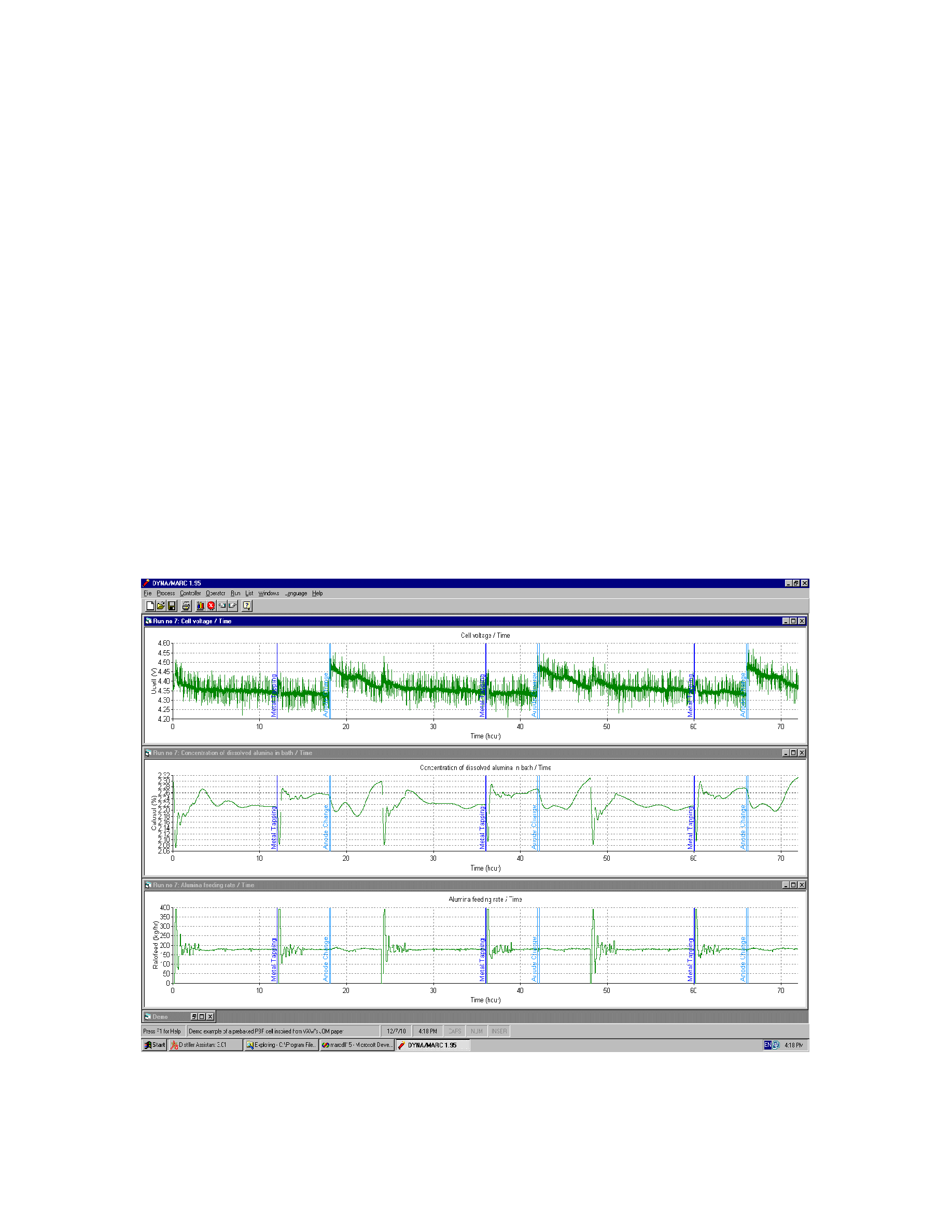
Figure 21 presents the results of a 3 days simulation containing 3 metal tapping events
and 3 anode change events. The anode change event does perturb significantly the In
Situ
perturbations remain relatively very small.
Figure 21: 3 days Dyna/Marc simulation using the In Situ control logic