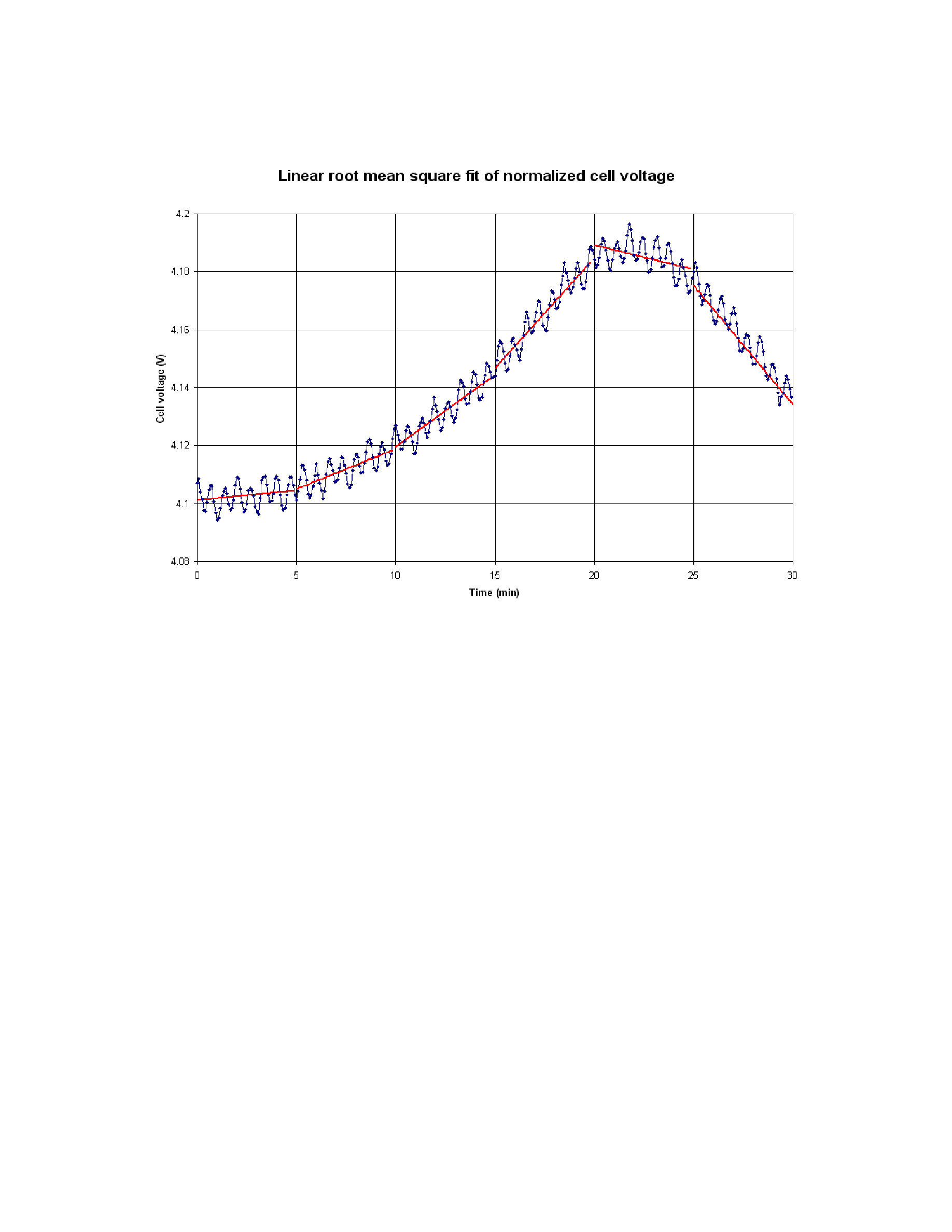
Figure 8: Linear root mean square fit of the normalized cell voltage
It is also possible to repeat a similar RMS data fit exercise using a quadratic
fitting can result in a less accurate estimation of the slope of the cell pseudo-resistance.
Yet, it all depends on the choice made for the sampling frequency, the moving average
calculation frequency and the data fit calculation time period.
Clearly, a longer time period is required if quadratic data fitting is employed
noise free normalized cell voltage must be significant enough to be well estimated.
Figure 9 presents the results of a 10 minutes fit using 120 data points. Quadratic fitting
of 120 data points obviously requires more CPU processing resources than a linear fitting
of 60 data points.
Again, the fit provides two important results. First, it gives a prediction of the
4.1199 V.
Second, it gives a prediction of the current noise free slope of the normalized cell